Why Cloud Technology is an Opportunity for Digital Marketing

Why Cloud Technology is an Opportunity for Digital Marketing

An Introduction to Cloud

Cloud Computing is an emerging technology that helps businesses, developers, and multinational firms deploy storage and computational services according to the organization’s requirements to store, access and share data without including direct physical space of their IT infrastructures.

In a nutshell, Cloud storage gets purchased from a third-party cloud service provider who owns and operates data storage capacity at different levels as desired by the customer and delivers it over the Internet in a pay-as-you-go model. It is the on-demand availability to enable high-end technology for handling a vast amount of data and its management. There are different cloud platforms available in the market like Dell Storage Technologies, Amazon Web Services (AWS), Microsoft Azure, and Google Cloud platforms that provide computation and storage capabilities.

This blog helps you explore the benefits that digital marketers can get from cloud storage.

Cloud Services and Digital marketing

Digital marketing is one of the leading opportunities supported by the digital economy.

The concept of a digital marketing system along with cloud technologies includes a study of the target product market and a solution to the analytical function of marketing, which involves-

1. Analysis

2. Organization

3. Evaluation

4. Forecasting

Leveraging technology for customer acquisition is what we can collectively call cloud services and digital marketing.

Cloud Services, which makes digital marketing a fun game and empowers digital marketing on a large scale, includes-

1. Analysis of trend

2. Organizing data and storing them

3. Evaluation of important patterns for forecasting of the market

4. Changing amount of customer from one domain to another

5. Predicting the results of a specific model deployed on the data stored in the cloud

The social engagement on platforms like Twitter, Instagram, and Facebook has been only possible due to the immense cloud storage and tools, allowing the data’s digital transformation into a valuable information pattern. Looking at cloud technologies’ potential, here are five reasons why it can be a rewarding choice for digital marketers and creators.

How Cloud Storage can benefit Digital Marketers

New Age tools for Digital Market

A large amount of random data is not always a useful asset for Digital marketers.

Cloud Technologies offer a wide range of powerful analytical tools that can be used for customer-centric insights, which allow the digital marketer to always maintain a lead in the market with the trends. These tools will enable the organization and the individual to hold the target audience’s pattern in the market for good strategy, planning, and investment.

Data Security Enhancement

Imagine, while performing some analytical function, the system shutdowns or power failure gets encountered. In such situations, the odds are high that sensitive data could get lost. But with data stored on the cloud, any changes made at any point of time are always being updated, reducing the chances of loss to negligible compared to the physical storage system. A digital marketer needs to possess secure data as often the content is very high in quality and requires much effort to renew or produce again if lost. Data security has one other aspect as well. Any data exchanged between one firm to another or a group of people is always encrypted end-to-end. Critical data gets often exchanged between the client and Digital marketer, which one would never take a chance to lose. This end-to-end encryption ensures the information is secure on the cloud and reduces the risk of a data breach by any third party member. Also, there are always chances that data slips into the wrong hands to which these cloud technologies are working to overcome with new advancements.

Cost Minimization

Cloud storage systems used by the organizations get paid for only the space and services they avail. The best feature about cloud storage is that the client has to deal with minimal or zero maintenance than the physical storage systems. Also, the physical system setup and maintenance is 70% costlier than the cloud storage systems. All the small and big organizations investing in the cloud storage system give an edge over the traditional storage system and always opens a room for scalability, which is the primary requirement of every firm as data only keeps increasing Morse pattern indeed!

More Space, Better Performance

Digital marketers always have a considerable volume of data consisting of high-quality pictures, graphics, videos, animations for their clients, and storing them on the system’s hard disc will quickly consume the space. It will result in delayed physical system activities. Cloud storage comes into the picture and saves a vast volume of your personal space, which could be used for other works rather than stacking up the local machine’s content. Cloud also eliminates drive failure issues and security concerns due to data available on the cloud, which could only be accessed by people with the same credentials. Sharing files and data also becomes easy, and performance also increases because the downtime decreases, unlike that of a physical system.

Improved Insights and Operations

One of the most potent uses of cloud storage is the data could get accessed from anywhere using any device since all the devices are compatible with the storage solutions. Digital marketers collect the data from different places like social media campaigns, analytical tools, and various other sources having data for content promotion and creation. It drastically improves the productivity and quality of operation, speeding up sharing or exchanging data with the client. For example, an Illustrator has to show his logo designs and works to his various clients. All he needs to do as a small scale enterprise is collect all his works, strategies, and logos stored on the cloud and share them directly, saving the client’s and the illustrator’s time and making the process fast, hassle-free. It also gives digital marketers an opportunity for innovation by saving a lot of time managing and handling data, as inbuilt cloud tools do it all very well.

In Conclusion,

In the present scenario, wherein data is the biggest challenge to maintain, and everyone wants to extract the most useful patterns, the cloud serves as the best option for the Internet market to follow trends, organize and store data securely. Cloud storage is a better option because all the data and vital files are getting stored at a remote server, and the device has an ample amount of space for using it for its in-house purpose.

With Cloud Computing, digital marketing has reached a level where you don’t need to invest heavily in hardware and software solutions to analyze content.

Gone are the days when you had to experience a lot of resistance in promoting your content. Now you have plenty of space and time to take your business or portfolio to another level with cloud technologies.

If you have just started with internet market or planning to use Cloud services for your growing business look no further than 6DegreesIT. We provide complete cloud-based IT solutions with best tools for managing, storing and analysing data for you which will leave no stone unturned to create the best Digital marketing experience with clouds.

Contact us today!

How to Build a User-Friendly Ride-Sharing App

The success of any startup gets judged by the impact it creates on the local businesses. But, when a startup injects a disruptive change in almost every industry worldwide, the success is unparalleled.

Ridesharing apps like Uber have successfully created such an impact globally. These apps have transformed the way we travel and taxi services more economical and luxurious.

Ridesharing is cost-effective, efficient, and environment-friendly. Therefore, the concept got accepted overwhelmingly with open arms. Widely-known ride-sharing apps like Uber and Lyft have become household brands that deliver high-quality service and the perfect customer experience.

Since the turn of the last decade, the Rideshare market has generated immense traction. Therefore, if you decide to venture into this business, you will be in for rapid growth.

So, what does it require to build a fully-functional, user-friendly ride-sharing app? Let’s find out.

What is a Ride-Sharing App?

Ride-Sharing applications differ from traditional taxi services. The significant difference is that a ride-sharing app lets you find a rider sharing the same route or heading to the same destination. Ridesharing insinuates splitting the fare, which results in considerable cost-saving.

There are different types of ride-sharing apps. Primarily,

  • Ride-Sharing wherein the driver of rideshare vehicles can share the car with a person heading to the same destination.
  • Carpooling wherein the driver alongside a group of people ride to the same destination without paying a third-party.
  • Peer-To-Peer Car Sharing wherein car owners have an option to rent their cars for a fixed rental fee and for a set amount of time.

Working of a Ride-Sharing App

Rideshare apps follow a particular mechanism for functioning smoothly:

  • Requesting: A rider sends a request to the nearest driver available.
  • Driver/Rider Matching: The driver receiving the request has the option to either accept or decline.
  • Ride Hosting: The passenger can opt to share the ride with others heading to the same route. Hosting a ride depends on the routes, pick-up, and drop-off locations of every passenger.
  • Ride Begins: The ride begins once the host accepts all passenger requests for sharing the ride.
  • Payment: Passengers can choose to pay either with cash or through a cashless medium. Since the ride is shared, the fares get split equally depending on the distance traveled.
  • Rating the Ride: Ridesharing Apps provide the option to rate both the accompanying passengers and drivers. This rating will affect both their profiles and, in some cases, even affect their future ride-sharing options.

User Roles & Features of a Ride-Sharing App

A ride-sharing app consists of 3 core users/elements:

  • Mobile App for Riders: An Android & iOS app wherein a passenger can request and book a ride conveniently.
  • Mobile App for Drivers: An Android or iOS app used by the drivers for executing the rides.
  • An Administrative Panel: The central control web-panel for managing riders, drivers, requests & the marketplace.

The amalgamation of these core elements makes this on-demand service a success. Let’s try and understand each aspect in-depth by analyzing each separate set of features.

Features of the Rider App

User-Friendly Registration

The first interface that the user will interact with within your app will be the registration portal. You must ensure that this interface provides the facility for account creation using contact numbers or linking Facebook or Google accounts.

Since customers will be entering their personal information, this interface must get encrypted for high-level security.

Pick-Up & Drop-Off

Once the rider creates an account, the first thing they would do is find a ride. For making the process easy, you must provide search boxes wherein the user will enter their pick-up and drop-off location. The aim is to offer timely results while ensuring user-friendliness.

Real-Time Tracking

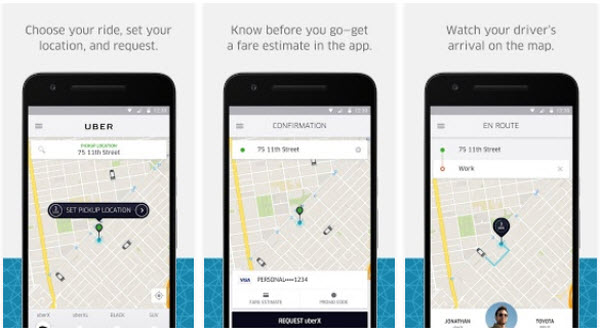
As soon as the rider requests a ride, a real-time tracking system’s instant activation is necessary. Usually, apps provide integrated Google maps API to track the driver’s location. This GPS tracking eliminates any inconvenience or confusion, especially in cases where multiple riders are involved.

Split Payment Calculation

Since it is a shared ride, the fare should also get equally distributed. The payment must depend upon the individual distance traveled by a particular rider to avoid any additional expense. This feature adds to the user experience significantly.

Information About Other Passengers

A feature that allows a passenger to see the profiles or details of other passengers with whom they will be sharing their ride. As a result, a level of security and trust gets built among passengers.

Driver Details

A feature that displays the complete driver profile along with the feedback received from other riders.

Hassle-Free Ride Cancellation

The app should provide a flexible interface wherein the rider can cancel a ride without wasting any time. You can add a specific ride cancellation time-frame within which a cancellation fee will not get charged.

In-App Help Center

The help center acts as an imperative feature for any ride-sharing app as it is the foundation stone regarding robust security. In case of any lost item, driver behavior issues, payment issues, or any form of mishap, the rider should be able to report through the app directly.

Chat System

To directly communicate with the driver via the app.

Push Notifications

Push notifications are an excellent feature for interacting and engaging the user from time to time. With this feature, customers get informed of all the necessary details such as car information, ride status, estimated arrival time, estimated travel time, discounts/offers, etc.

Rating/Review

A feature to enable customers to rate and provide feedback on their ride experience.

Features of the Driver App

Driver-Friendly Registration

The driver app should contain an easy account creation process without a host of technicalities. You can also add the same Facebook and Google login or registration through a contact number.

Accept/Decline Ride Request

As per their convenience, the drivers can either accept or decline a ride request.

Trip Information of Every Rider

Since multiple riders are traveling together, drivers are highly likely to get confused. Therefore, every rider’s trip information should get displayed over the driver’s interface. It will further help them synchronize the pick-ups and drop-offs with ease.

GPS for Route Navigation

Providing a built-in GPS will not only help the driver reach every rider’s location in time but also help them in discovering the shortest route possible. As a result, you would never have to worry about the drivers visiting a specific place for the first time.

Chat System

To directly communicate with every rider via the app.

Automated Fare Calculation & Payment Options

At the end of every ride, the app will auto-calculate the fare. The app should provide the driver with the facility to either mark a payment received by cash or paid through a card.

Features of the Admin Panel

Driver & Vehicle Management

Admins can screen and approve any new drivers or if the vehicles getting used are level with the company’s standards.

All the fine details covered like the year of manufacturing, model, insurance start and end date, insurance value, mileage-wise number of services done, future service schedule, etc.

Payment Management

Contains the accumulation of details like who submitted the cash, cash amount, period, etc.

Receipt generation at the end of every ride and automatically sync it with the driver app to show the total amount collected for that trip.

Rating/Review & Complaint Management

A feature that helps admins keep track of every driver’s performance and, if any complaint arises, react, and respond to it immediately.

Dashboard & Reports

An admin dashboard- that displays all the key stats such as notifications, metrics, management, email templates, to name a few.

Reports- that display KPI performance Report, Daily Collection, Daily Vehicle Utilization, Earning Report, Driver Performance, Hourly Vehicle Utilization, etc.

Salary Generation & Invoicing

Salary generation of every driver and handling all the customer invoicing.

Trip Tracking

Keeping track of the amount of time for which a vehicle is idle and not driving.

Notification generation if any vehicle is idle for five or more minutes, along with the driver’s details driving that particular vehicle.

Some Advanced Features for Enhanced User-Experience

Multilingual App

A multilingual app expands the reach of an app to a broader audience and adds to its scalability.

SOS Button for Emergencies

Whether it is the driver’s or rider’s fault, both should be provided with the facility to report any emergency in real-time for immediate help. This feature will build a strong sense of security and trust among the users.

Advanced Ride Scheduling

The facility to schedule a ride in advance saves time and makes it convenient for both riders and drivers.

Facility to Mark Favorite Locations

When riders visit a particular location quite frequently, it will be convenient for them to mark it so that they don’t have to type it every time.

Tipping Drivers

A feature that only helps a driver earn more but also encourages and motivates them to perform better.

An Offline Mode

Smooth internet connection is not accessible everywhere. When a driver enters a low-network area, the app must facilitate accessibility to start and end a trip even on bad internet connections.

Voice-Based Ride Requests

This functionality goes a long way in assisting specially-abled people & can even result in fast bookings.

“Spot Me” Feature

The app can facilitate a rider’s phone screen to display a specific color assigned to that driver. To quickly get spotted at their pick-up location, a rider can hold up their phone so that their driver can find them.

Leave Management

The admin can manage all the driver leaves from their admin panel.

Notable Things to Keep in Mind While Building a Ride-Sharing App

A ride-sharing app is financially helpful for both the service provider and the customer. However, there are some fundamentals to consider before developing the app-


Researching Phase

A thorough understanding of the industry is essential. You must be aware of the present and upcoming trends, how the industry will evolve, demography to target the right audience, and a deeper understanding of the niche.

Selection of Technology

For building an app that will potentially contain a database of millions of users, technology plays a vital role. Choose a proven technology that can simultaneously withstand this traffic and provide a high level of security.

UI/UX Design

Crafting an interactive, eye-catching, yet simple UI/UX design ensures user-friendly navigation and attracts more audience.

Cost of Building a Ride-Sharing App

The overall cost of developing a rideshare app depends on several factors, such as:

  • The choice of app development platform: Android, iOS, or a cross-platform architecture.
  • Employing a team consisting of a project manager, Android developer, iOS developer, Frontend developer, Backend developer, UX/UI designer, and QA engineer.
  • The entire project tech stack.

In Conclusion, Building a ride-sharing app requires patience and dedication as it will not result in success overnight. Take inspiration from all the functionalities mentioned above and combine them with your innovative ideas to create the modern competitor to ride-sharing apps like Uber and Lyft.

If you plan to venture and develop a ride-sharing app but are not technically sound, look no further than 6DegreesIT. Our professional team of developers and designers possesses years of experience using modern technologies to create a feature-rich and highly-secure ride-sharing app with a seamless user experience, yielding a profit for all the parties involved.

Contact us today!

Create Data-Driven Digital Marketing Strategies For Your Startup with AI

In today’s technologically advanced world, we witness the growth of startups more frequently than ever before. Young entrepreneurs join hands and start shoestring operations with external funding to bring about an innovative change in modern society.

When you plan to grow your startup, several things must get encountered – from hiring the right team to your product design. One integral aspect of any business’s success, whether small or large, is Digital Marketing, i.e., marketing or advertising your services or products on the internet to attract an audience.

No matter how perfect your end product is, it won’t survive long without marketing, and this is where digital marketing comes to the forefront. And modern technologies like Artificial Intelligence (AI) are rapidly gaining ground in the digital marketing sector.

At present, AI is affecting and transforming every aspect of our lives, which includes marketing strategies. With the competitive nature existing within the businesses, integrating AI to create data-driven digital marketing strategies is essential to maintain pace with competitors or even leapfrog them.

Artificial Intelligence & Digital Marketing

During years gone by, marketers, mostly owning a startup, hesitated to apply artificial intelligence to their marketing strategies. With time and innovation, the top successful companies have started adopting it and reaped the benefit. Brands like Spotify and Amazon have been using AI systems successfully to bring about a change in digital marketing.

For example, Amazon uses AI to display only the relevant products to a buyer based on previous views, searches, and purchases. This personalized experience practice increases the likelihood that the buyer makes an initial purchase or even turns into a regular customer.

What is a Data-Driven Digital Marketing Strategy?

In the digital marketing industry, most startups develop their strategy based on assumptions about your product, target audience, and performance. These assumption-driven strategies can lead to the downfall of your business even before it gathers pace.

On the other hand, a data-driven strategy is created solely on data and insights gathered through a thorough analysis of as much information as possible. Your decisions get based on these quantitative insights.

Market Research

Initially, you carry out full-fledged research about your target audience, interests, and competitors within the industry.

Setting Up a Buyer Journey

Before buying your product, a customer goes through a three-phased buyer journey.

In the first phase, they find out the advantages and benefits of your product. Secondly, they compare alternative solutions. Finally, they decide whether to buy your product eventually or not.

During the development of a digital marketing strategy, this buyer journey must get optimized.

Selecting Digital Marketing Channels

There are several digital marketing channels, which include email, social media, and content marketing. Search Engine Marketing (SEM) and Search Engine Optimization (SEO) also factor in this step.

Launch, Analyze, and Rectify

Finally, you can launch the digital marketing strategy and keep on analyzing its performance. Identify all the problems and react immediately with alternative solutions.

Use of AI in Creating a Data-Driven Digital Marketing Strategy

Artificial intelligence (AI) combined with Machine Learning (ML) carry significant potential in developing data-driven marketing strategies. These revolutionary technologies excel at gathering and processing large amounts of data rapidly from which you can gain valuable insights.

Another advantage is the ease of automation. AI Algorithms can take care of tasks such as content research and come up with more in-depth results.

Let’s take a deep dive in understanding how one can use AI and ML in creating a data-driven digital marketing strategy to grow a startup:

Gain Valuable Insights from Your Customers

As mentioned above, the first step of creating a digital marketing strategy involves researching your target audience. AI helps in finding patterns at a large scale and provides actionable valuable insights.

AI pattern recognition helps to analyze large sets of data gathered from market research.

As an alternative, you can even use AI algorithms to generate vast amounts of data from discussion forums or social media. Using natural language processing, these AI algorithms can ease through countless reviews, articles, and posts.

The main aim is to carry out sentiment analysis, a significant advantage of Artificial Intelligence. With an AI tool, you’ll be able to identify the major trends, questions, and things that can get improved related to products like yours. You can also figure out your audience’s demographic details.

Competitor Research

AI tools undoubtedly provide you an instant edge over your competitors.

Using these AI-driven tools to track your competitors on social media can help you figure out their detailed strategy. You can gain stats on their types of posts, high-performing content, and posting frequencies. You can even gather useful insights into their followers, i.e., how they interact with your competitor through shares, likes, and comments.

AI tools also help in reverse engineering your competitors’ website analytics. Once your website gets launched, keep a close eye on bounce rates and page traffic.

Furthermore, AI and ML can even help in mining your competitors’ link profiles, which will boost your rankings in search engines.

AI-Optimized Buyer Journey

As soon as a potential buyer gets in touch with your brand, your AI will keep tabs on them. What particular aspect of a specific product interests them? What are they looking for?

These insights will then send personalized recommendations, adjust paid ads, and curate your website content. Researches and surveys have proven that customers are highly likely to purchase a brand that tailors content according to their interests.

Another crucial element of a buyer journey is customer service and AI significantly improves that as well. Especially during the comparison phase, prompt customer support can prove to be the clinching factor. AI ChatBots can answer routinely asked questions and even produce auto-generated email responses, which reduces the burden on your team to respond to urgent or complex customer queries.

Email, Social Media, and Content Marketing

AI helps brands even personalize Email Marketing campaigns based on user behavior, which means marketers can send emails triggered by specific actions. As a result, only relevant emails get delivered to your customers’ inboxes, with subject lines, messaging, and product recommendations all chosen based on that customer’s behavior.

AI tools can also improve your performance on Social Media platforms. These tools help analyze your past performance to figure out the right content to post. Overall, you will develop a social media strategy for maximum reach and results on each different platform.

When it comes to Content Marketing, AI helps produce high-quality content that drives organic traffic to your website. Based on your competitor’s performance and target audiences’ interests, AI tools can generate content ideas and indicate which topics will resonate with your potential customers.

Furthermore, the right AI tools can quickly scan through all existing posts and articles on a particular subject, helping you approach the topic, structure your content, and improve on the current articles or posts.

Deep-learning algorithms will improve your vocabulary and polish your grammar.

Boosting Your SEO

Without a doubt, SEO is crucial, and one of the top priorities for any digital marketing strategy’s success.

Integrating AI can provide a massive boost to your SEO techniques.

It’s essential to know that search engines like Google themselves make use of AI and ML algorithms. To influence these algorithms and get your business ranked higher, AI is a must.

Initially, AI can help optimize your keyword research. AI-driven keyword research is an asset in tackling the latest trends, such as the Latent Semantic Indexing (LSI) that has recently gained momentum.

AI can even be useful to optimize your content for voice search. Voice searches utilize natural language processing AI. Ensuring that your content is compatible with them will improve your rankings as almost 50% of the searches will be voice searched in the coming years.

In Conclusion, Integrating technologies like artificial intelligence and machine learning into your digital marketing strategy from the beginning will help grow your startup and gain an advantage over your competitors. Your marketing approach will get based upon data insights rather than mere assumptions.

Harness AI tools for email, social media, and content marketing, as well as SEM and SEO.

In a nutshell, AI will give your startup an edge right from the start and set you up for long-term success.

If you plan to build a startup from scratch but are not specialized, look no further than 6DegreesIT. Our professional and highly-skilled digital marketers have years of experience using modern technologies, be it Artificial Intelligence or Machine Learning. We will help create a result-oriented data-driven digital marketing strategy for your startup’s success.

Contact us today!

Major Role of AI in the Future of Pharmaceuticals

Major Role of AI in the Future of Pharmaceuticals

“No matter how you perceive it, AI will certainly change every aspect of our lives.”

In today’s technologically advancing world, it’s nearly impossible to talk about any industry’s future without mentioning Artificial Intelligence (AI). Be it cybersecurity, manufacturing, or retail; AI will significantly impact every industry.

The Pharmaceutical Industry is no exception.

The pharma industry is responsible for discovering, developing, producing, and marketing drugs or pharma drugs as medications. These drugs get administered to patients to vaccinate and cure them or alleviate the symptoms.

Artificial intelligence in Pharma uses automated algorithms to perform tasks that traditionally rely on human intelligence. Since the last decade, AI’s introduction in the pharma industry has modernized scientists’ thinking in developing new drugs, tackling diseases, and more.

Let’s take a deep-dive into how AI is currently and will be shaping the pharma industry in the future:

Drug Discovery & Trialling

Artificial Intelligence is known for its ability to enhance R&D. Cloud-based AI platforms are already getting developed by major pharma companies. These platforms excel in finding patterns in large datasets and in using algorithms that produce accurate predictions in discovering new drug molecules to target-based drug validation and discoveries.

AI can significantly reduce the time taken to conduct a drug trial and get approval, meaning that the drug can get launched into the market as soon as possible, resulting in cost savings and ensuring that new innovative medicines reach patients faster.

Modern Genomics

Genomics is the biological field focused on the structure, evolution, function, mapping, and editing of genomes (an organism’s complete set of DNA, including all its genes).

The field of genomics is known for producing large datasets that help discover and develop potential new therapeutics. Artificial intelligence is highly valuable in genomics as it accelerates the time it takes to generate insights from information.

AI-based platforms can help map the genes responsible for causing certain diseases and then further map the drug molecules that can target and effectively cure them.

At present, AI platforms are getting used for discovering the drug molecules for treating specific neurological diseases.

Drug Repurposing

Drug Repurposing is the strategy of identifying new uses for an already existing approved drug. It reduces the time and overall cost massively.

AI platforms are a significant boon for drug repurposing. These platforms can evaluate the available data of drug molecules to match new targets.

In the future, AI, in combination with Machine Learning (ML), can help to repurpose drug molecules for curing rare diseases such as the current COVID-19 pandemic.

Personalized Medicine

The feature that makes humans so unique is that we are all built differently and respond differently to circumstances. All are not similar concerning their physical structure, genetic makeup, rate of metabolism, etc.

Therefore, based on an individual’s requirement, the therapy or dose must get personalized.

Artificial Intelligence can go a long way in providing the required framework to stratify patients, implement specifically tailored treatment and in doing so, increase the response rates, and reduce the medical errors and adverse effects.

Diagnosis

AI and ML go hand in hand. Across the globe, doctors can use advanced ML systems to collect, process, and analyze large volumes of patients’ healthcare data. Healthcare providers worldwide use ML to store sensitive patient data securely in the cloud or a centralized storage system. This data is known as electronic medical records (EMRs).

AI and ML go hand in hand. Across the globe, doctors can use advanced ML systems to collect, process, and analyze large volumes of patients’ healthcare data. Healthcare providers worldwide use ML to store sensitive patient data securely in the cloud or a centralized storage system. This data is known as electronic medical records (EMRs).

Since massive amounts of data get analyzed quickly, the entire diagnosis process gets faster and more accurate than ever before.

Quality Drug Product Development

Artificial Neural Network (ANN) and Design of Experiment (DoE) are two major self-learning AI platforms that help understand the inter-parameter interactions. Further, they support composition and process optimization, which helps develop a high-quality drug product, based on an understanding of the cause-effect relationship between process parameters and quality target product profile.

Clinical Monitoring

Specific ailments like Parkinson’s disease require clinical monitoring. Artificial Intelligence can enable doctors to monitor their patients remotely, adjust their drug dose regularly, and fix appointments.

Furthermore, AI can effectively monitor a patient’s movement via a smartphone camera and determines the severity of the symptoms.

In case the conditions become worse, the AI sends an alert to the doctor and arrange a check-up. Remote setups like these help eliminate the need to travel back and forth to the doctor’s clinic, saving the patient’s hassle of traveling and waiting in long lines.

Predicting Epidemics

AI and ML are already getting utilized by significant pharma and healthcare providers to forecast and monitor epidemic outbreaks across the globe. These technologies work on the data gathered from various sources, study the connection of diverse geological, geographical, environmental, and biological factors, and connect the dots between these factors and previous epidemic outbreaks.

Such AI/ML models will be significantly useful for underdeveloped economies that lack the financial framework and medical infrastructure to deal with an epidemic outbreak.

Improving the Manufacturing Process

Artificial Intelligence can present several opportunities to improve or enhance the pharma industry’s existing production and manufacturing processes. These manufacturing opportunities include:

  • Reduced design time
  • Quality control
  • Reduction of Waste
  • Improvement of production reuse
  • Predictive maintenance

The prime benefit of AI is that it makes the entire process automated and removes the possibility of any human intervention, thus eliminating any room for human error.

Marketing

The pharmaceutical industry is a sales-driven sector whose success is dependent on the number of sales. These sales fluctuate on the marketing strategies used by the business. AI can refine existing marketing styles and techniques.

With the implementation of AI, a pharma company can map out the typical customer journey, which will enable the company to identify the marketing technique that ultimately persuaded the customer to make a purchase. Obtaining this information is crucial to ensuring long-term success and only to promote a profitable business. The marketing strategies that are working can get continued, and those not working can get discarded immediately.

In Conclusion, AI operates as a machine learning system, continuously analyzing and responding to data, enabling researchers to gather information effectively. As a result, the more data AI responds to, the smarter it will become, advancing the pharmaceutical industry perennially.

If you plan to develop an AI-based platform for your pharmaceutical company or startup but are not technically specialized, look no further than 6DegreesIT. Our professional and highly-skilled developers have years of experience using all the modern technologies, be it Artificial Intelligence or Machine Learning, and create the most secure and reliable product for you.

10 Web Design Myths to Avoid At All Costs

10 Web Design Myths to Avoid At All Costs

In life, no matter what field you decide to venture into, there are certain myths associated with each one. Individuals tend to follow these myths so religiously that they persist without an end. The Web Designing world is no exception.

In web design & development, all the beginners and novices come across many myths that they end up adopting, leading to a negative long-term impact on their brand.

Let’s taken an in-depth look at the 10 Web Design myths that every web developer will come across one day-

The Homepage Matters the Most

In recent times, a trend witnessed in the web design industry has been developing one-page websites or cramming all the content on one homepage. If you have a limited range of content, this might be a good idea. However, it is far better to have multiple entry points and web pages for your user. Some users might enter your website through a URL or a link, while some find it through a search.


Although the homepage is the entrance to your website, you don’t want to neglect the importance of the sub-pages. The myth of developing this one-page website will also limit the ability to expand your business in the future.

Web Design equals Attractive Appearance.

Most web designers get sold this idea that designing a website means decorating it, i.e., focus only on the appearance. The majority of people relate web design to only how a website looks. However, there’s more to it than soothing colors and pretty fonts.


A proper web design considers various parameters such as the user experience and creating elements that function flawlessly & are easy to interact with for your users. Although your website’s visuals are crucial, the websites that stand out among the competition are the ones that are functional and attractive at the same time.


As a business owner, you must always remember that the primary aim of developing a website is to sell your service or product. But if the user is finding it hard to locate the purchase button, then there’s something majorly wrong with your web design.

Responsive Web Design is Not Necessary

Nowadays, more than 50% of a website’s traffic gets generated through mobile devices. Therefore, the days of developing a desktop-only design are long gone.

Ever since Google introduces the “mobile-first indexing,” which means that your website’s ranking will depend on how well it gets optimized for mobiles, the importance of having a responsive website has only increased. Developing a website that fits into any screen size while offering the same user-friendliness on all devices is a no-brainer in modern times.

Present Everything in the Navigation Menu

To help the visitor navigate the website, web designers tend to provide all the page links in the top navigation menu. The most significant disadvantage of presenting everything in the main navigation is that it can make visitors feel overwhelmed and force them to leave your website and go somewhere else.

A much better option is to provide only a handful of links and a prominent search option, which helps the user find something they are looking for.

Only Use Sans Serifs for Web Typography

As a web designer, you get bombarded with the suggestion of using sans serif fonts on your website infinite times. Back in the day, using sans serifs was due to low-resolution screens’ inability, making it hard to read any other typeface.

However, with time, we have witnessed the growth of high-resolution screens. Therefore, now users can easily see and read any font on a website, not just the clichéd sans serifs.

Sliders Make a Significant Impact on a Website

Sliders are a trendy technique among web designers to give your website a different look. However, when it comes to user engagement, these sliders or rotating carousels have little to no impact.

Experts have concluded that only 1% of people that visit your website click on a slider. They tend to slow down your website and result in confusion as they present too much information in a congested area.

There are better ways out there. Use the content you were going to put in the slider and develop multiple landing pages to create different funnels. Designers can also build web pages using the parallax scrolling effect instead of a slider or carousel.

Providing Social Media Feed on the Website is Necessary

Another popular web design element is to provide a social media feed on your web pages. What benefit do you get from having a version of your Instagram, Facebook, or LinkedIn feed on your website’s homepage regarding user engagement? The answer is Not Much.

There is a much better way to promote your social media accounts. If a user wants to follow your brand on social media, you can provide them with buttons. These buttons ensure that your social media pages are just a click away from your visitor.

Prioritize Design Over the Content

Users browse your website for the content about your product or service, not the design. Therefore, prioritizing the design and appearance over the content will limit the growth of your business.

Content is the integral component of a user interface design, and if neglected, can lead to negative consequences. A website containing a simple design with high-quality content will perform much better on a usability test than a highly-attractive design with dummy or pointless content.

More the Features, Better is the Design

Providing your user with features is essential. However, providing quality over quantity is even more significant. To impress the visitor, a web designer tends to add unnecessary elements that make the entire web design pointless.

No doubt features add value to your website. But, you must ensure that only add those features that are relevant and help in driving conversions.

Updating Your Website is Not a Necessity

A common myth that floats about is to design the perfect website and then forget about it. However, the web designing industry is an ever-expanding domain that serves up new exciting trends each year.

Therefore, to ensure optimal performance, you must update and expand your website with fresh ideas and concepts. It is also better to redesign the website every 2 to 3 years to ensure that it operates without hindrance.

In Conclusion, if you are an aspiring novice web designer and are thinking of developing a website for your online business, always avoid these 10 myths. Instead, try implementing the alternatives and solutions suggested above to create a modern website.

If you are planning to hire an experienced web designer to build you a fully-functional website? Look no further than 6DegreesIT. Our professional web designers will leave no stone unturned to create the best product for you, avoiding all the myths mentioned above.

Contact us today!

Bettar be safe then sorry

HOW TO DEVELOP A HIPAA COMPLIANT APP?

The year 2020 has been nothing short of a rollercoaster ride. Events (mostly unfortunate) have kept on happening at an unprecedented pace.

However, these challenging times call for creative measures, and when you combine sharp business minds with modern technology, it opens up a whole host of opportunities. One such opportunity that has opened up during COVID-19 is the development of various Health Care Apps to help reduce the pressure on the Health Care Department of countries.

Individuals and companies have realized that this pandemic has presented the chance for advancements in the not-so-familiar Telemedicine industry. We have witnessed a significant increase in the launch of Health-related apps in Google’s Play Store and Apple’s App Store by established Health Organizations.

However, these apps must be HIPAA Compliant before launching them into the market.

What is HIPAA Compliance?

The Health Insurance Portability and Accountability Act (HIPAA), introduced in 1996, is the regulatory standard that a developer has to follow while developing an app. There are other compliances, but they vary from nation to nation. HIPAA is the standard for all countries.

The purpose of HIPAA is to provide a high-level of security for mobile app users to protect their medical records and Personal Health Information (PHI).

If you can’t guarantee the safety of a patient’s confidential information, your app and brand’s integrity will get diminished forever.

How can you make your app HIPAA Compliant?

There are specific Guidelines, Security Safeguards, and Fundamental Elements that you need to follow to make your app HIPAA Compliant and trustworthy for your users.

So, what are they?

The fundamental HIPAA Guidelines are-

  • Only authorized users should have access to ePHI, i.e., electronic Protected Health Information. The ePHI includes patients’ confidential information such as medical records created, stored, transmitted, or received in any electronic format or media.
  • Data transmission should be fully encrypted to protect the integrity of ePHI.
  • A system of monitoring communications containing ePHI should get implemented to prevent accidental or malicious breaches.

The three HIPAA Security Safeguards to get implemented include-

  • Technical Safeguards:
  • Network infrastructure and cybersecurity, such as malware protection, encryption, and firewalls.
  • Complete encryption of data that can be stored or transferred through Algorithms like AES (Advanced Encryption Standard).
  • Automatic Logoff feature, which will protect PHI when someone loses their device while logged in your app.
  • Unique User Identification, i.e., each user must have their own login credentials. Even employees should not use a common username or password to log in.
  • Security Lock or DND feature to give the user control over data sharing.
  • Emergency Access Procedures, i.e., during an emergency, there should be a way to access only necessary ePHI.
  • Physical Safeguards:
  • Protection of the backend, i.e., where the ePHI gets stored through a multi-factor authentication system.
  • Protection to limit and access control to physical work sites where ePHI is maintained, such as locks or alarm systems.
  • If the user deletes your app after some time, all the sensitive data, including ePHI, must be wiped out to ensure no healthcare data remains on the device.
  • Administrative Safeguards:
  • Staff training ensures that all the policies, procedures, and documentation get appropriately followed to maintain the app’s security standards.
  • In the event of a data breach, a contingency plan must get implemented to notify all the affected parties.
  • Information Access Management to provide access to only relevant ePHI.

Certain fundamental elements need to be in place to ensure proper HIPAA Compliance-

  • Appointing a Compliance Officer and a Compliance Committee.
  • Executing all the written policies, procedures, and standards.
  • Conducting regular training for Employees.
  • Conducting internal monitoring and auditing.
  • Promptly responding to any data breach incident and taking necessary measures.
  • Developing effective lines of communication.

In Conclusion, the current scenario demands the growth of Digital Health Care through apps. The basis of an application is the level of security provided for the end-user, and if your app is not secure enough, there is no point in launching it in the market.

If you plan to invest in the healthcare sector and develop a HIPAA compliant technological software or app, look no further than 6DegreesIT. Our professional developers will leave no stone unturned to create the most secure and reliable product for you, which will yield your desired outcome.

Contact us today!